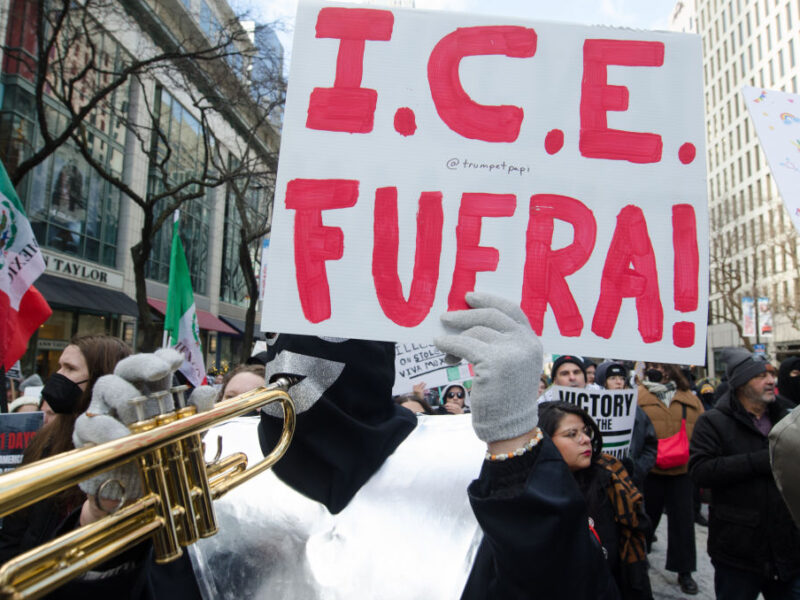
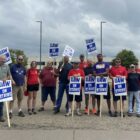
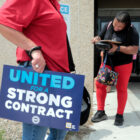
How Trump’s Immigration Crackdown Chills Organizing and Erodes Conditions for All Workers

This article is a joint publication of Workday Magazine and The Nation. In late 2025, federal immigration authorities detained a non-union janitor who had recently—and publicly—accused contractors for Minnesota’s Ramsey County of mass wage theft. “Despite a bunch of intimidation and threats to his job by his non-union employer, who was trying to pay less, he came forward at a press conference launching these allegations,” Greg Nammacher, the president of SEIU Local 26, told me. 

The courage of this worker, who has been released but is now in deportation proceedings, played a vital role moving the case forward, according to the union, and it supported a similar wage theft case against Hennepin County contractors, which was also announced at the press conference where he spoke. The effort delivered for workers. The case against Hennepin County contractors resulted in the disbursal of nearly $400,000 in back pay to more than 70 subcontracted workers in December 2025, and the case against Ramsey County contractors is ongoing and has already led to some internal policy changes. 

When someone who fought so successfully for workers—both immigrants and non-immigrants—is detained, “it sends a chill through all the workers in the non-union companies that are trying to stand up and get their rights enforced,” Nammacher said.

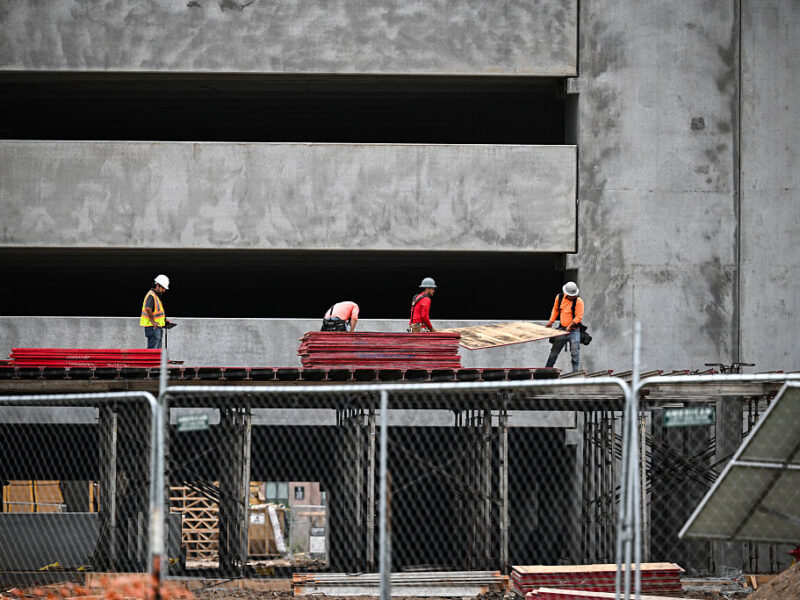
Construction Bosses Are Using Elaborate Schemes to Harm Workers

This article is a joint publication of Workday Magazine and The American Prospect. In 2020, Alejandro was working a construction job in the Madison, Wisconsin, metro area, doing texture, painting, and drywall on residential homes, when his boss asked him to do something strange. The boss gave Alejandro a check, and told him to go to a local bakery to cash it. He was then instructed to use that cash to pay himself and his co-worker for their labor. Alejandro, who arrived in the U.S. from Mexico in 2019 and is now 29, was unfamiliar with employment practices in this country and did as he was told, paying himself $800 every two weeks.