On Campus
UMN Grad Workers Express Hope and Urgency as They Gear Up for Union Election
|
Over 65% of University of Minnesota Graduate Workers have signed their union cards, an optimistic start after many attempts over the past several decades.


Workday Magazine (https://workdaymagazine.org/category/unions/page/2/)
Over 65% of University of Minnesota Graduate Workers have signed their union cards, an optimistic start after many attempts over the past several decades.
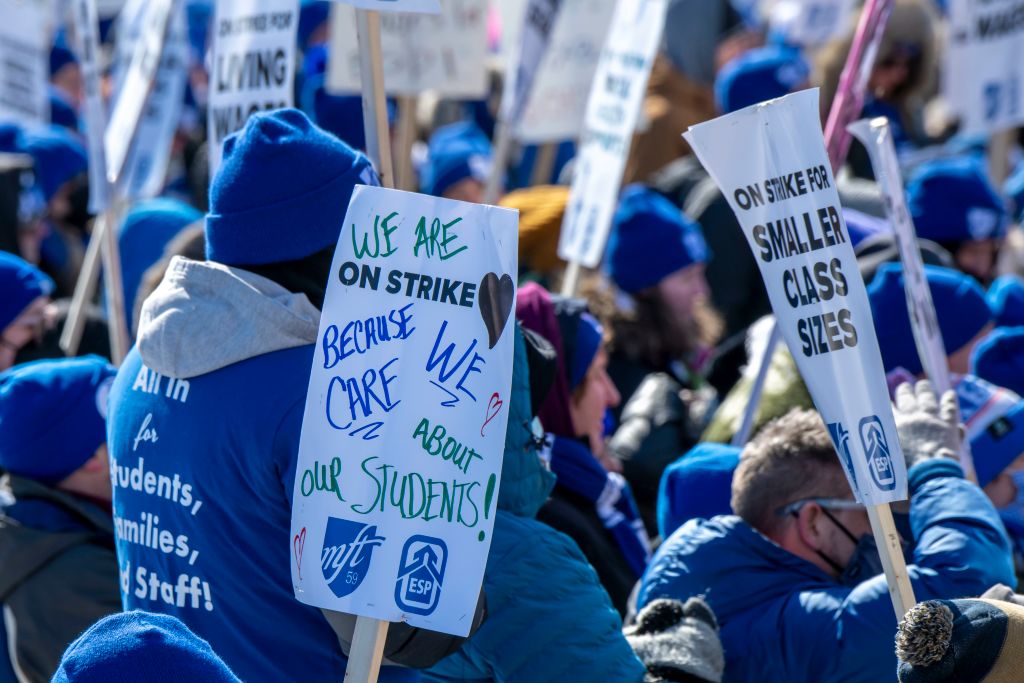
Why workers say captive audience meetings are coercive and unfair.
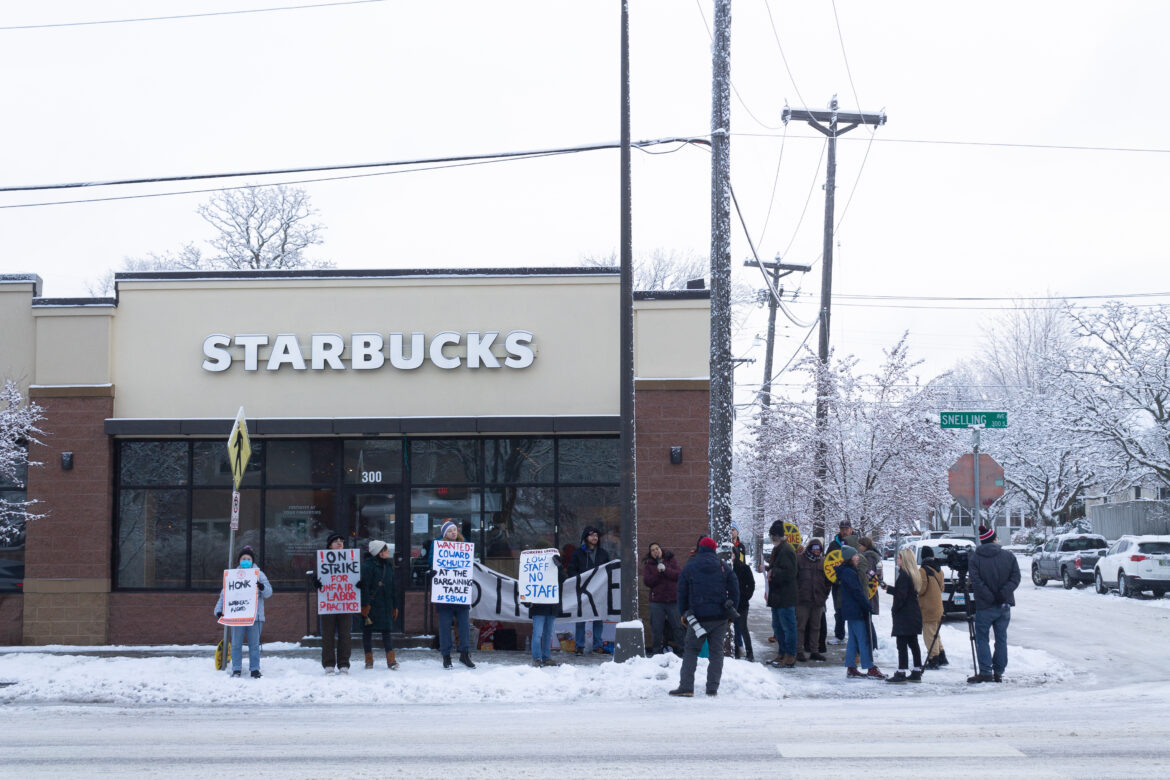
Amid a historic unionizing campaign across the country, workers are continuing to organize despite Starbucks ‘soft’ union-busting tactics.
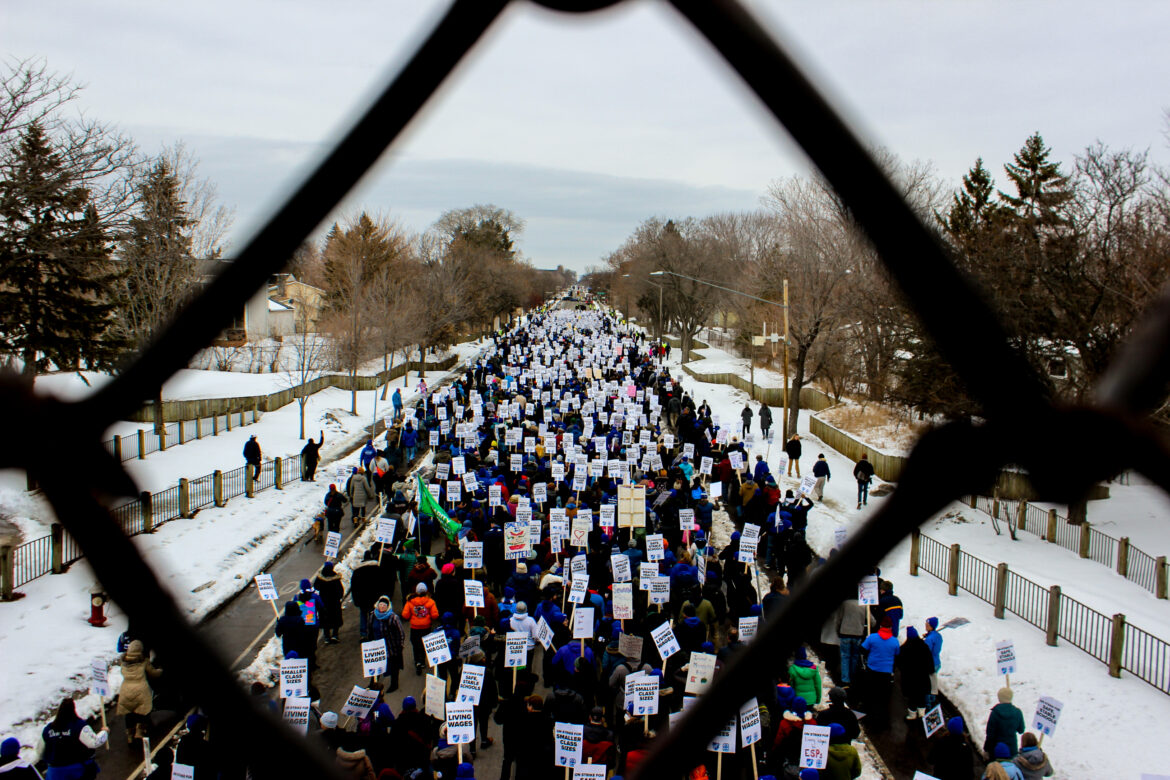
It is no surprise that out of the hundreds of strikes that began last year, two historic ones occurred in Minnesota, where feminized workers withheld their labor to demand better working conditions, hold their employers accountable, and stand up against greed for collective good and care.
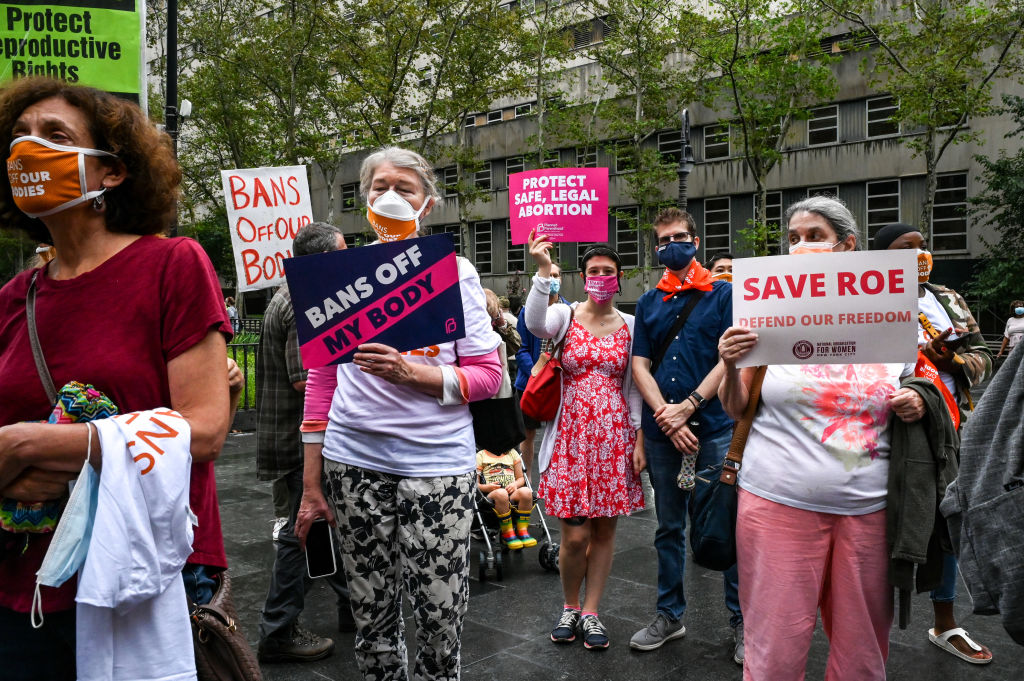
Recently unionized healthcare and nonprofit workers in the Midwest are weathering the changes to reproductive rights and access.
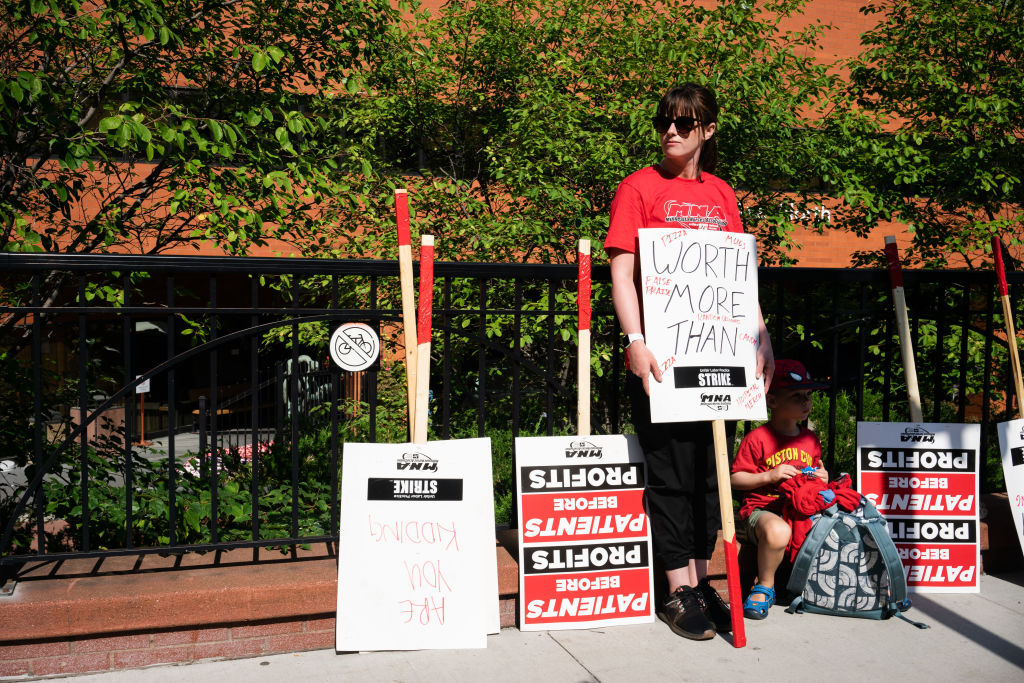
Minnesota nurses made national headlines by going on strike this fall, but as contract negotiations stall, they’re fighting for a voice on the job.

Railroad unions continue their slow creep along the path to a settlement—or strike—in contract negotiations covering 115,000 workers. On August 16, the Presidential Emergency Board convened by President Biden issued its recommendations for a settlement. Many rail workers say they fall short and are prepared to strike to win more. The PEB recommended 22 percent raises over the course of the five-year contract (dating back to 2020), which would be the highest wage increases rail unions have seen in decades. But they are offset by increases in health care costs—and come in the midst of high inflation.
The convention saw remarks from Governor Walz, MN Attorney General Keith Ellison, and passed 14 resolutions, including a call for a special session to pass a $1.4 billion bonding bill.
Trader Joe’s workers in Minneapolis won their union in a landslide vote August 12, making theirs the second store to go with the new, independent Trader Joe’s United. The win raises the question of whether the grocer, with its 530 locations and progressive image, could be the next Starbucks. It seems that Trader Joe’s management is considering becoming the next Starbucks in a different sense: closing stores and harassing workers out of union drives. A store in Boulder, Colorado, had a vote lined up for this week, but workers seeking affiliation with Food and Commercial Workers (UFCW) Local 7 there withdrew their petition the day after filing charges against the company for coercion and intimidation. The Trader Joe’s drives reflect an emerging theme of recent new organizing: independent versus affiliated unionism.
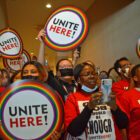
Housekeepers and other hotel employees took the stage on Day 1 of the AFL-CIO’s Pride at Work convention and told delegates that the Millennium Hotel had pulled back tentative agreements with their union two months after booking the convention. Delegates didn’t take the news sitting down. They marched out of the Millennium ballroom and into the lobby, with hotel staff in the lead, and held a lively rally in their defense. When security guards demanded demonstrators move to the sidewalk outside, they refused, holding the lobby for nearly a half hour. The action marked a spirited start to the three-day convention that began Aug.